No Needles, No Problem — A Brief History of Knitting Without Needles
Knitting without needles isn't a modern shortcut or a beginner's workaround.
People have been looping yarn around their fingers, spools, and carved wooden tools for centuries — long before anyone thought to write it down as a pattern.
Below is a quiet tour through the main no needles knitting techniques and where they came from.
Spool Knitting — The Knitting Nancy
You may know it as French knitting, corking, or simply the little wooden spool with nails in the top that appeared in many a childhood craft box.
Peg-based cord making turns up in various cultures across history, but the small wooden spool knitter became particularly familiar in Europe during the 19th and early 20th centuries. It was often one of the first textile tools given to children — simple enough to learn in an afternoon, satisfying enough to keep going for years.
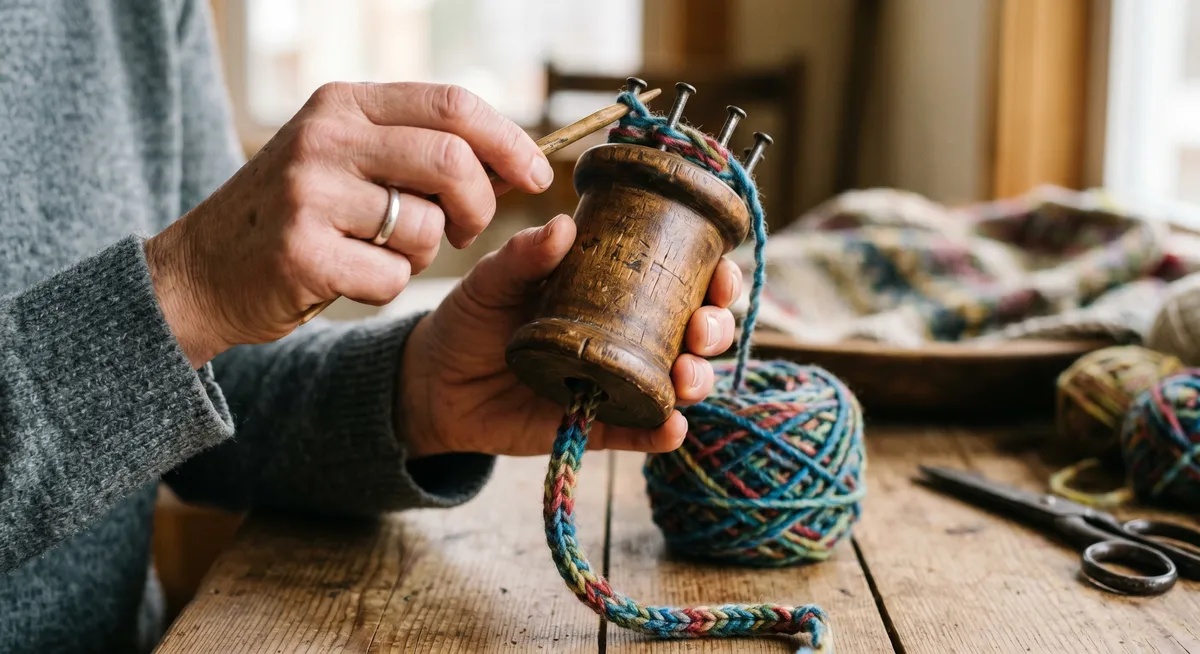
What it makes: narrow I-cords, decorative trims, ties, and the kind of long woolly rope you produce enthusiastically without being entirely sure what to do with it next.
I still use a wooden knitting nancy myself. There's something quietly pleasing about keeping an old method going with the same basic tool it always used.
I have also used a toilet roll for a spool knitter (more on that soon).
Loom Knitting — Pegs in a Frame
Peg-based knitting in various forms has existed for a long time, though the circular and rectangular knitting looms most people recognise today became widely available in the 20th century.
They were designed to make knitting more accessible — consistent stitches, no needle coordination required, and particularly useful for chunky yarn projects. During the craft revivals of the late 20th and early 21st centuries, loom knitting found a new generation of enthusiasts who appreciated both its simplicity and its results.
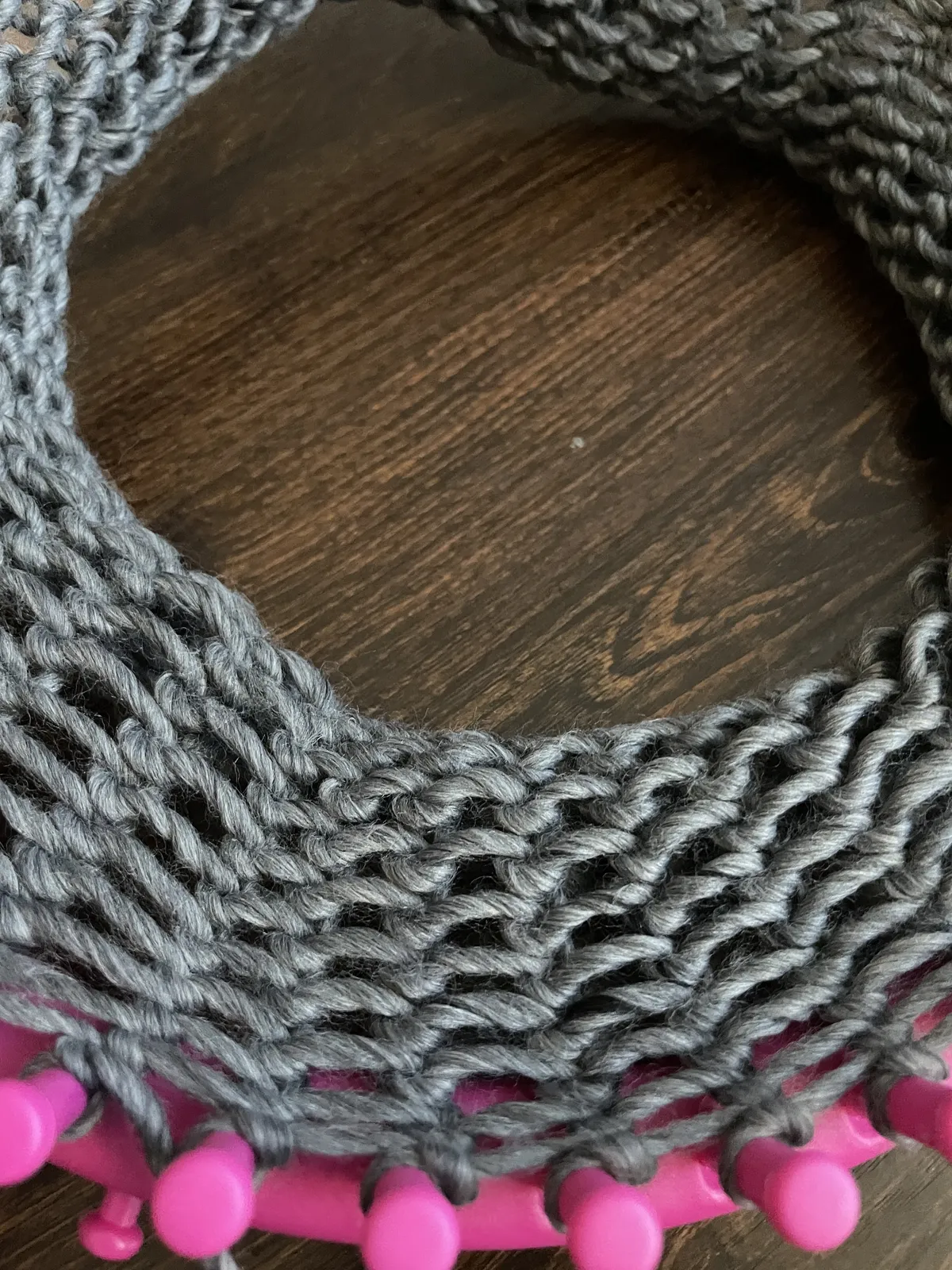
Hats, scarves, blankets — a loom handles all of them without asking too much of you in return.
The Lucet — A Medieval Cord Maker
The lucet is a two-pronged tool, usually wooden, used to produce a firm square cord. It was widely used in medieval Europe for lacing garments, making drawstrings, and creating decorative trims — practical, durable, and requiring nothing more than the tool and a length of thread.
Unlike spool knitting, lucet cord has a distinctly structured, almost braided quality. It's strong enough to be functional and neat enough to be decorative.
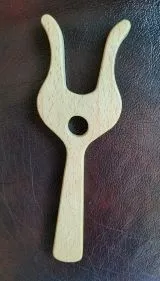
Today the lucet is used by historical reenactors, fibre enthusiasts, and anyone who has come across one and found themselves quietly captivated by how satisfying it is to use. It is one of those tools that looks complicated and turns out to be wonderfully simple.
Finger Knitting — Just Your Hands
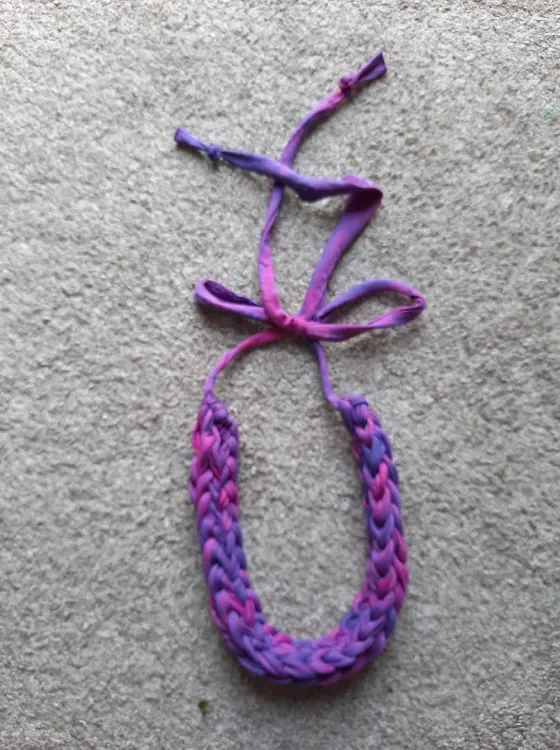
Finger knitting likely developed independently across multiple cultures, for the obvious reason that hands are always available and yarn is all that's needed.
It has long been used as an entry point into textile work — particularly for children — because there is no tool to learn, no setup required, and the results appear quickly. Its simplicity is precisely why it has lasted.
Arm Knitting and the Modern Additions
Arm knitting is the newest arrival in the no needles family, gaining popularity in the early 21st century alongside the trend for oversized chunky yarn.
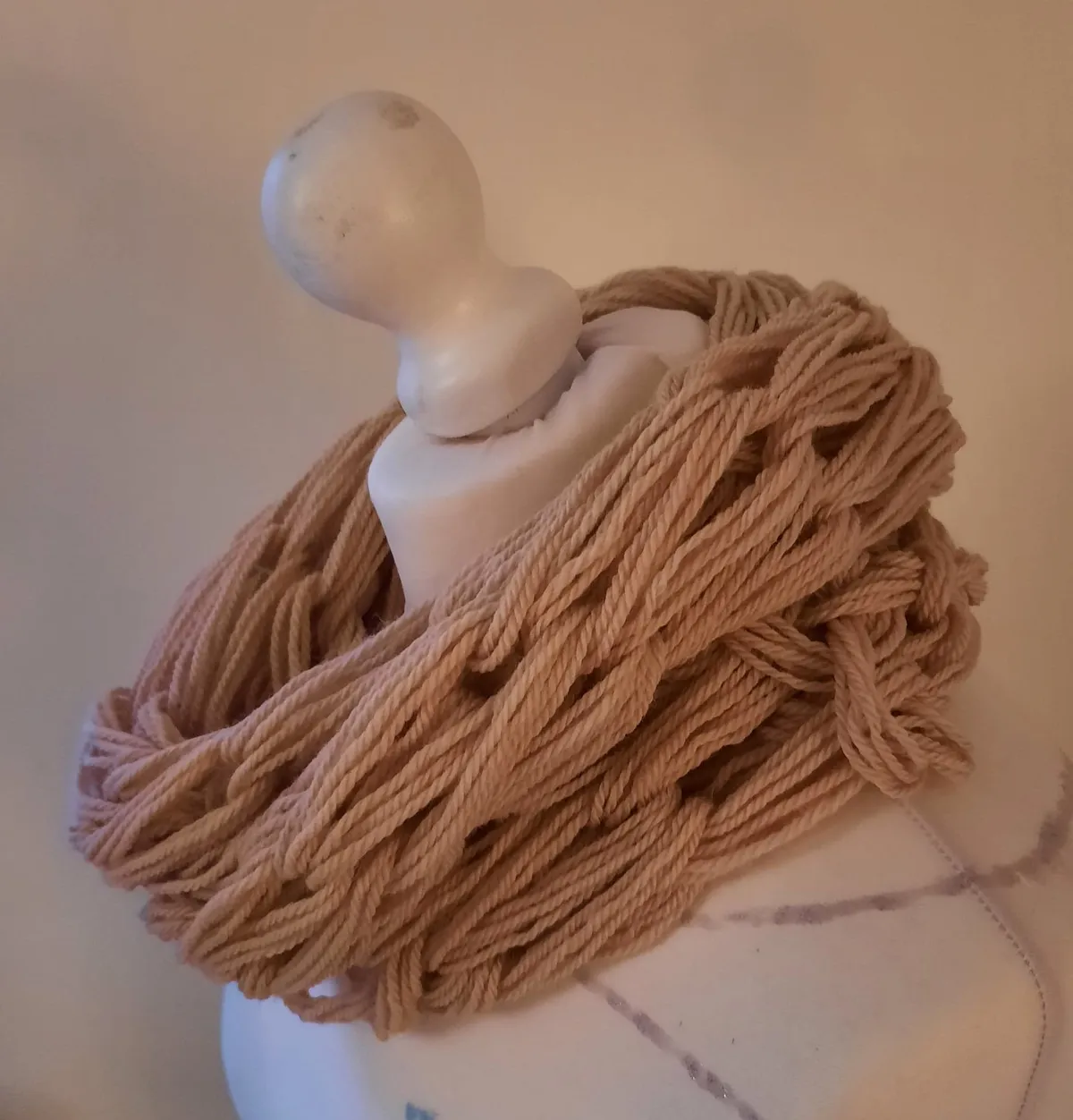
Using arms instead of needles produces fabric on a much larger scale — big blankets, chunky cowls, scarves that take an afternoon rather than a month. It isn't ancient, but it follows the same principle that runs through all of these techniques: forming loops into structure using whatever comes to hand.
A Final Thought
No needles knitting techniques didn't appear from nowhere. They are practical adaptations that developed across centuries, shaped by the materials available, the tools at hand, and the very human inclination to make something from a length of fibre.
From the medieval lucet to the modern arm knit blanket, the core idea has remained the same. The methods just keep finding new people to pick them up.