Finger Knitting - A Simple Way To Start Knitting Without Needles
If you've ever wanted to try knitting but felt put off by needles, tension, or the general sense that it requires more coordination than you currently possess — finger knitting is a very good place to start.
It needs nothing except yarn and your hands. No needles, no hooks, no setup. You simply loop yarn around your fingers and build from there.
Why Finger Knitting Is Good For Beginners
Most of the things that make traditional knitting feel difficult — managing two needles, controlling tension, keeping track of where you are — simply don't apply here.
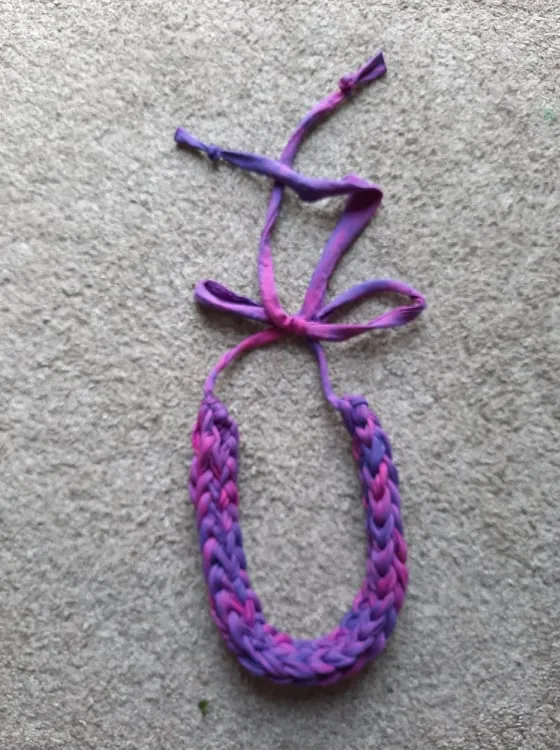
You can see exactly what your hands are doing. The loops are large enough to follow. And if something goes wrong, it's easy to see where and easy to fix.
It's also portable in the most literal sense. No bag of equipment, no pattern to follow. Just yarn in your pocket and your hands.
It’s straightforward, portable, and surprisingly versatile.
No Needles, No Hooks — No Fuss
One of the things I like about finger knitting is how little it asks of you. With chunkier yarns you don't even need a needle to finish off — the tail tucks neatly into the stitches and that's that.
It's about as minimal as crafting gets, which is part of why it's lasted as long as it has.
Choosing the right yarn
The yarn you choose matters more than you might expect, especially when you're starting out.
Chunky or super chunky yarn is easiest to begin with. The loops are bigger, easier to see, and more forgiving. T-shirt yarn is particularly good — it has enough structure to behave itself without being stiff.
Smooth yarn is easier to learn on than textured yarn. You want to be able to see your stitches clearly, especially in the early stages. Very dark colours can make this harder, so a mid-tone or light yarn is a kinder choice for your first attempt.
Natural fibres are lovely to work with but synthetic yarn is perfectly good for learning and easier to wash. Start with what's affordable and comfortable in your hands — fibre content can become a consideration once you know what you're doing.
What Can You Make?
Finger knitting produces cord, which means it suits projects where length is the point.
Skinny scarves, belts, necklaces, bracelets, decorative ties, simple cords for wrapping and gifting — these are its natural territory.
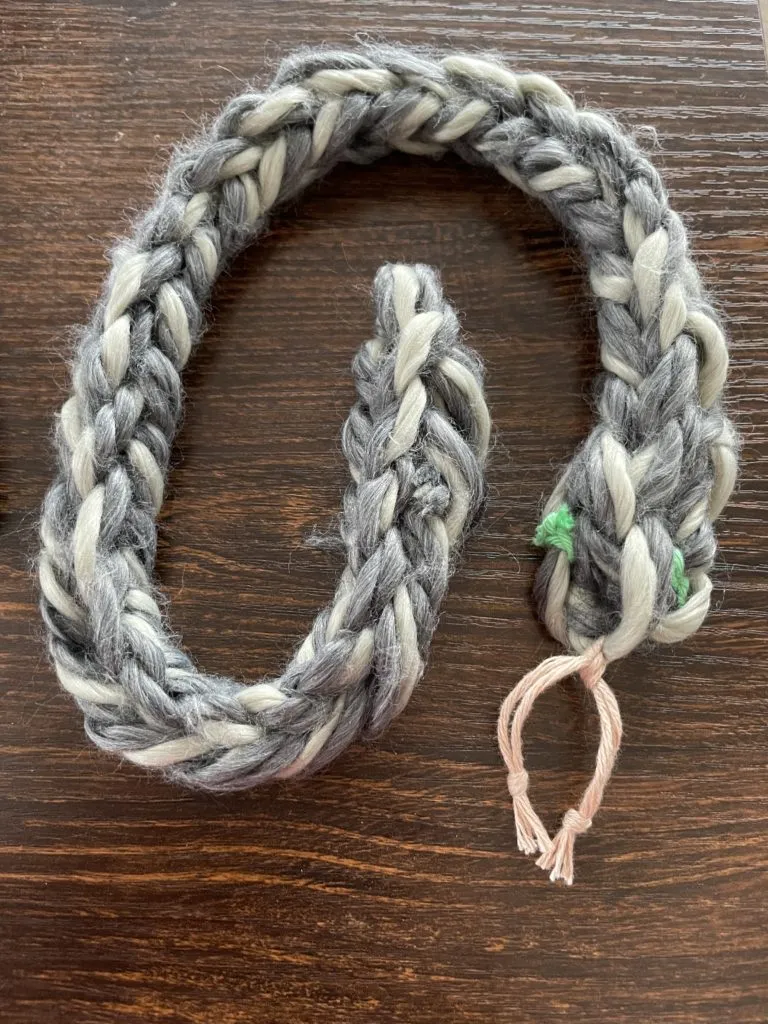
It's particularly satisfying for quick wearable makes that feel finished and useful rather than like a practice piece, like this cool finger knitted snake.
Final Thoughts
Finger knitting builds an understanding of how knitting structure works — how loops form, how tension affects the result, how yarn behaves — without the frustration that needles can introduce too early.
If you'd like to see the process in action, my finger knitting snake tutorial on You Tube is a good first project — straightforward, has a clear end point, and results in something with a personality of its own.