Legend or Truth? A Few Thoughts on Folklore
Folklore is one of those words that gets used quite casually — and yet, when you stop to think about it, it's a rather extraordinary thing.
It is, at its simplest, the collected stories of ordinary people. Not the grand histories of kings and battles, but the quieter knowledge passed between neighbours, written in the margins of books. The things people believed, feared, and whispered about when the nights were long.
Where does it come from?
Most folklore begins with an attempt to explain something unexplained.
A child disappears near the marshes — and so the story of a creature that lures the unwary is born. Crops fail without reason — and so the ill intent of a neighbour becomes the most reasonable answer. Strange lights appear over the water — and they need a name, a story, a reason to exist.
Over time, those explanations travel. They shift and change with each telling, picking up local colour, local fear, local humour. What begins in Norfolk becomes something subtly different by the time it reaches Yorkshire. The creature changes shape. The warning changes its edge.
This is why folklore feels so alive. It was never fixed. It was always in conversation with the people who carried it.
The truth that folklore carries
There is a phrase worth holding onto here: cultural truth.
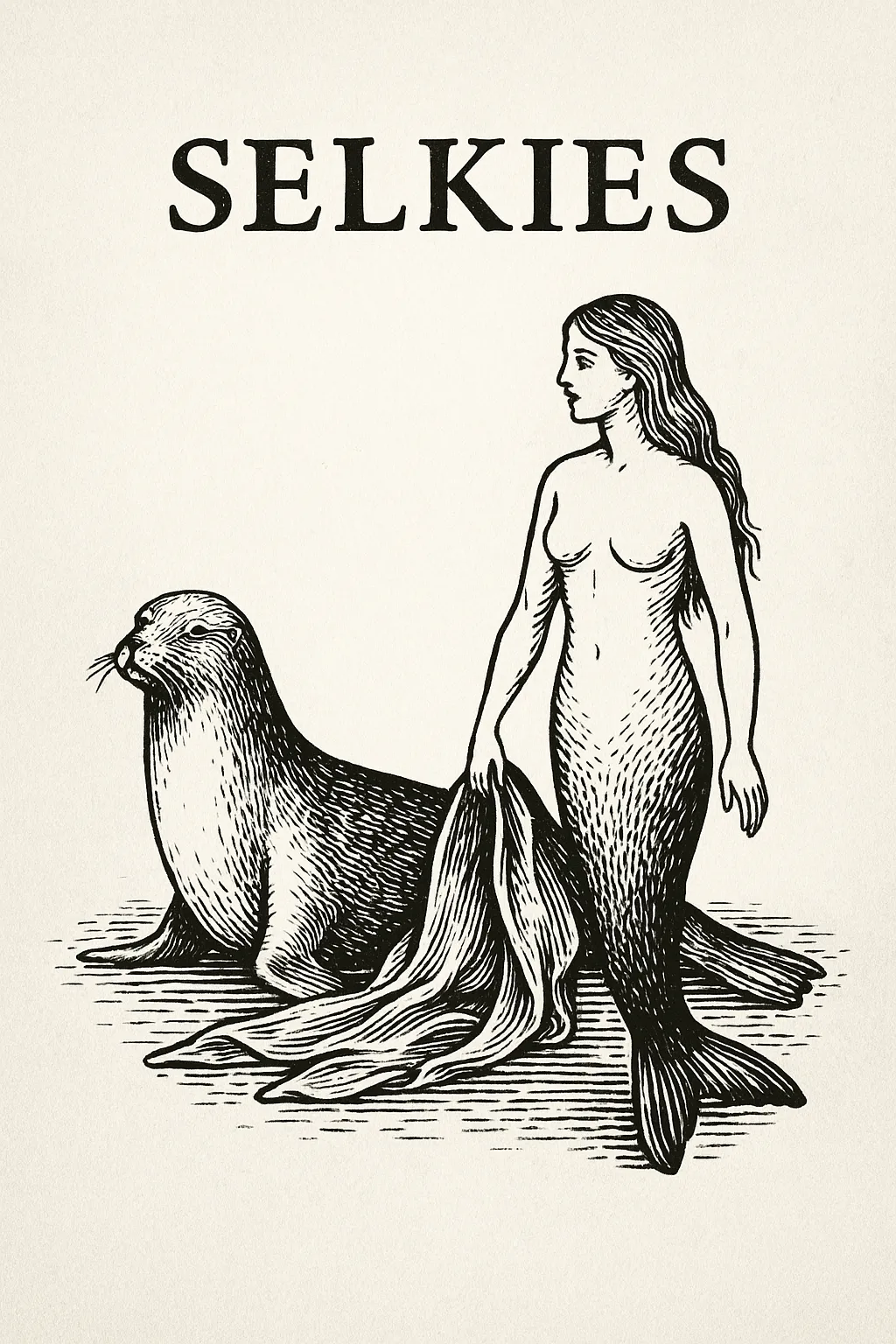
Folklore isn't historically accurate, but it reflects the fears, values, and social situations within a community. For example, the Black Shuck is the name for a black animal said to prowl the Norfolk road. The Selkie is said to transform from a seal to a human. They are stories, stories that have transcended time, and generations.
But what is important is that these stories are true in a different and perhaps more important sense. They reflect what people feared, what they valued, how they understood danger and death and the uncanny.
This is what makes folklore so quietly extraordinary. Strip away the supernatural and what remains is a precise record of human feeling — passed down not in books or archives, but in the telling.
Legend or truth?
The legends of the British Isles are full of creatures that should not exist — and yet they have existed, in the telling, for centuries. That feels like a kind of story worth paying attention to.
If you'd like the creatures of British folklore on your wall, the Creatures & Curiosities of the British Isles map is available in the shop— an illustrated printable featuring Black Shuck, the Selkies, Water Kelpies, and more.